One operation, one entry
Invoices, payments and transactions automatically feed the accounting workflow.

Milo by XMILO · Finance
Milo starts from what your nonprofit actually does: invoices, payments, bank statements, purchases, loans, donations, assets and budgets. Accounting entries are built as day-to-day management happens.
You enter an operation once. Milo prepares the entries, reconciles payments, checks consistency and guides you through to the annual accounts.
The principle
Enter a supplier invoice and Milo prepares the entry. Create a customer invoice and the same thing happens. Receive or make a payment and Milo reconciles it and generates the corresponding entries. Users normally do not have to choose debits and credits themselves: Milo knows where the operation comes from and applies the organisation’s accounting rules.
Invoices, payments and transactions automatically feed the accounting workflow.
Bank transactions are used to reconcile invoices, payments and accounting entries.
Simplified accounting, double-entry accounting or both: Milo always starts from the same underlying data.
Automatic entries
Invoices, payments, depreciation, provisions and other operations automatically create accounting movements. The accounting screen is mainly there to review what Milo has prepared and intervene only when a correction is actually needed.
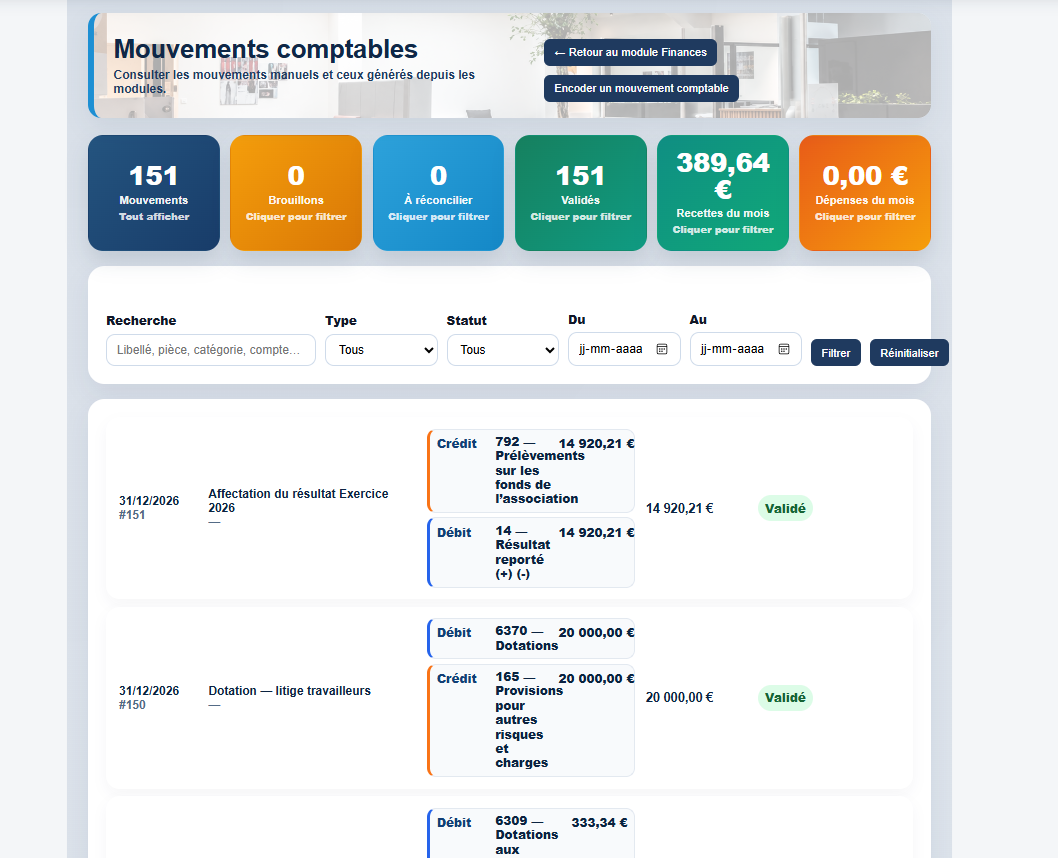
The list shows the origin, status and processing of each accounting entry.
Banking
Bank statements can be imported from the Excel or CSV files supplied by the bank. Milo imports incoming and outgoing transactions, helps identify counterparties and reconciles payments with customer and supplier invoices. You immediately see what has been matched and what still needs attention.
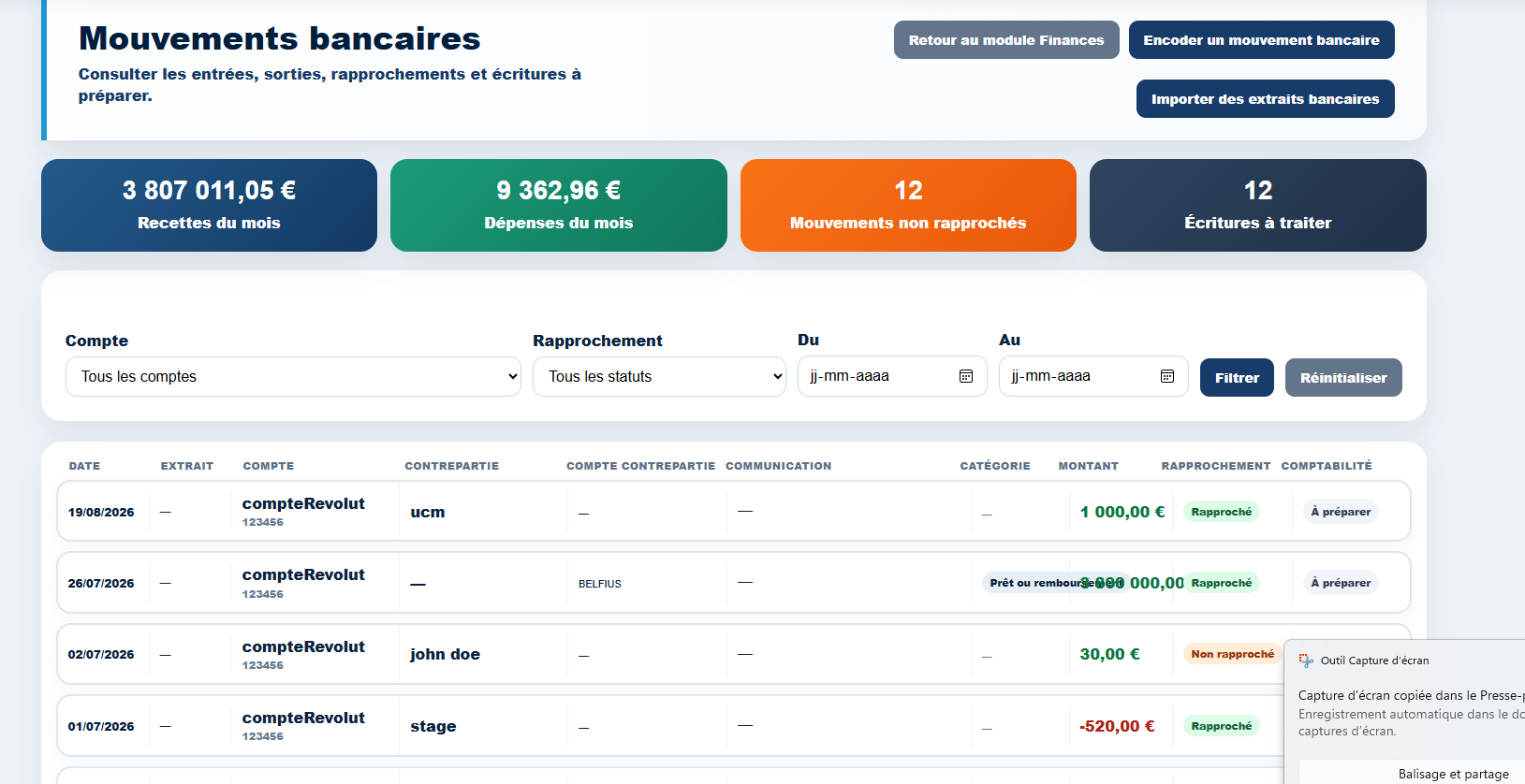
Payments become control information rather than data that has to be searched for manually.
Two views
The same operations can feed both an income/expense view and full double-entry accounting. There is no need to enter the same operation twice.
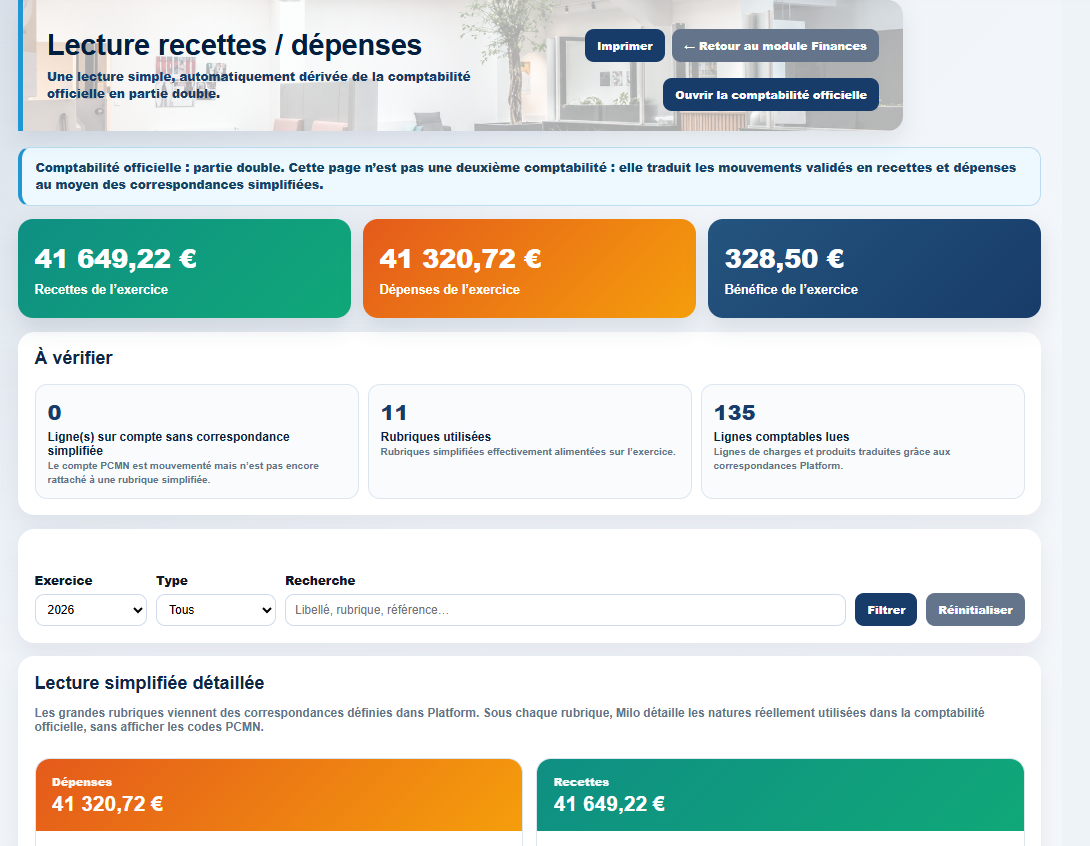
A simple view that is immediately understandable for day-to-day monitoring.
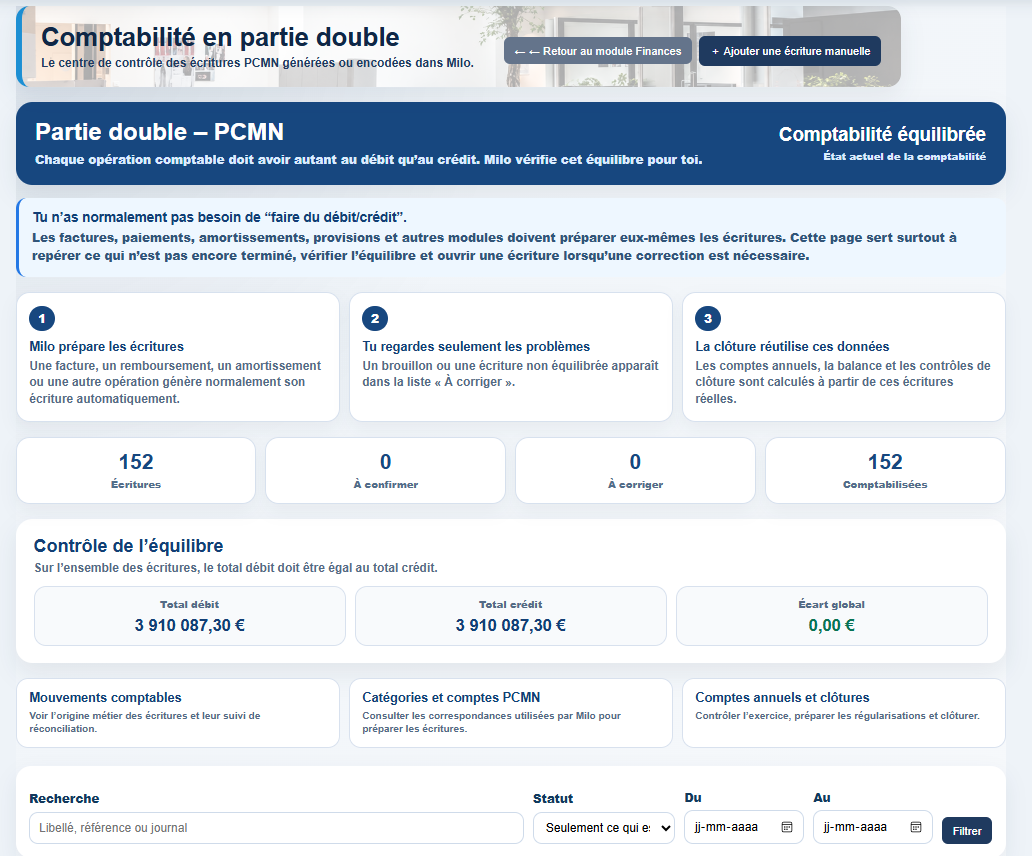
Balanced journal entries are generated from operations recorded in Milo.
Year-end closing
Milo checks entries, flags incomplete items and guides the closing process. The presentation file then brings together the statements needed by the board, general meeting or advisers.
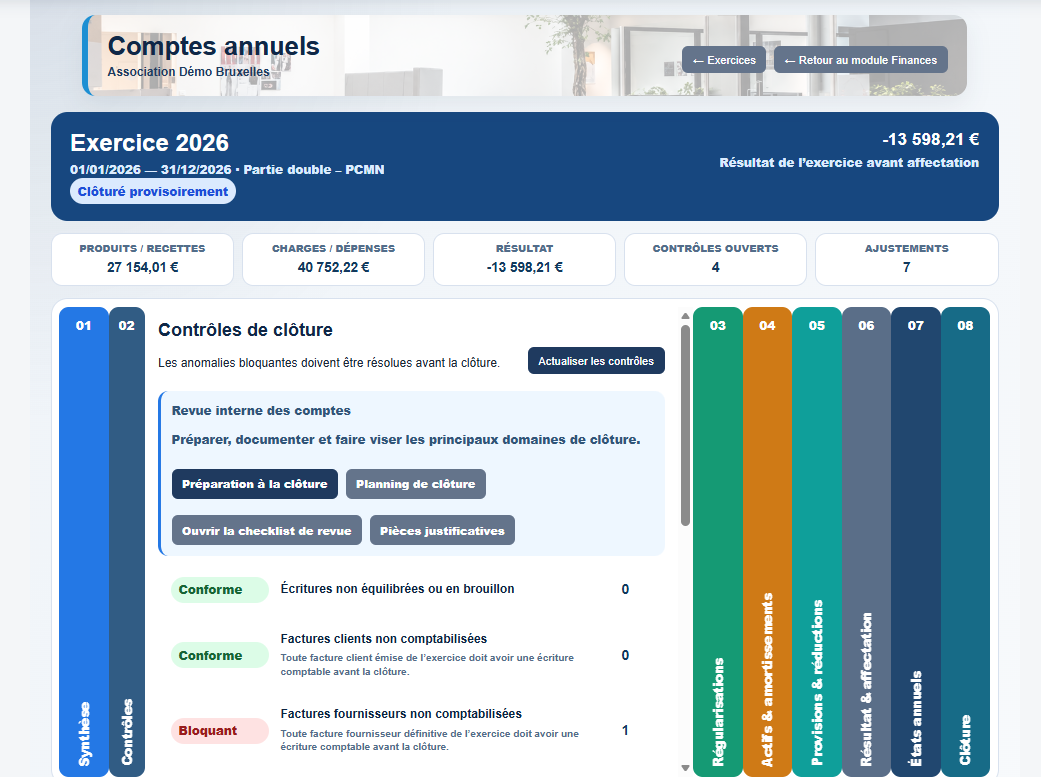
Checks show what is complete, what still needs review and what is preventing closure.
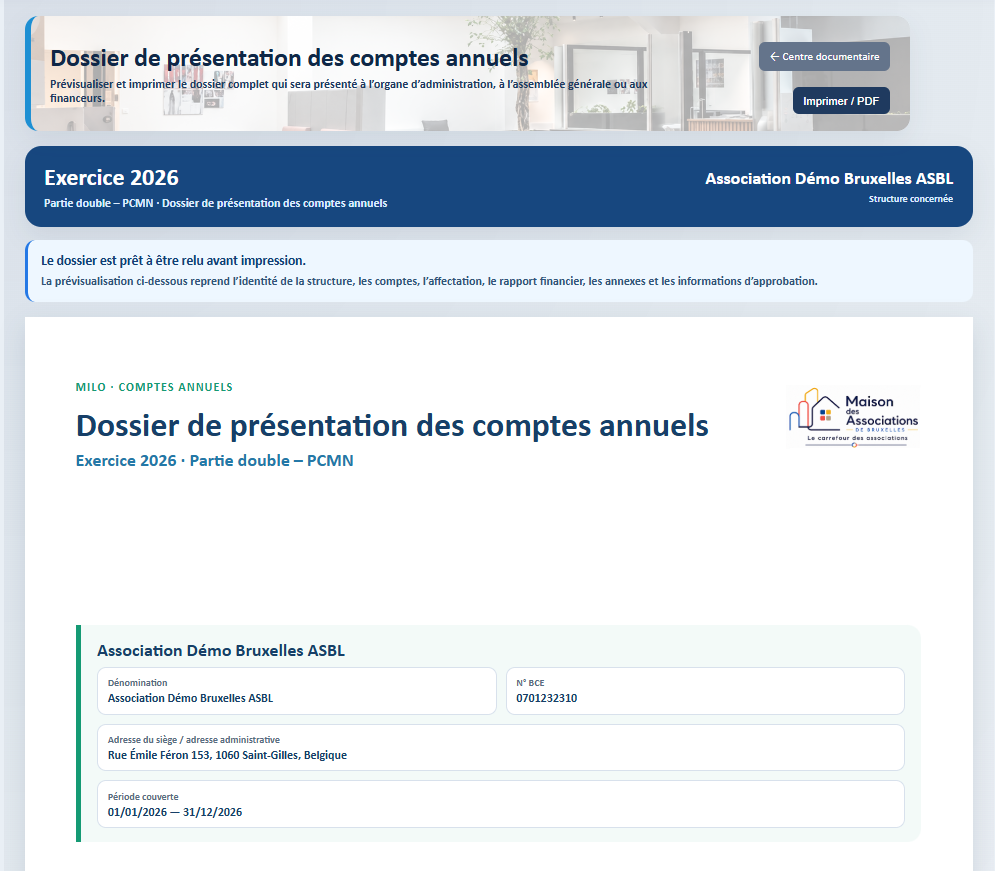
Annual accounts and statements are brought together in a clear, usable file.
Assets
Equipment, furniture, installations, vehicles and other investments can be recorded as assets. Milo tracks acquisition value, depreciation period and carrying value and compares theoretical depreciation with what has actually been booked.
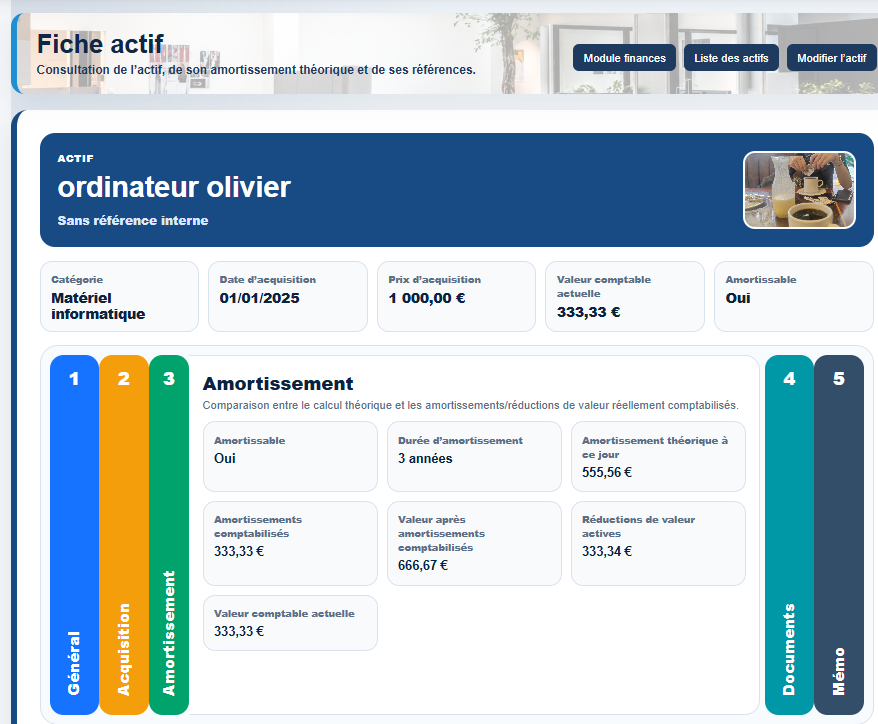
A consolidated view of assets, values and depreciation.
Cash flow
Known due dates, repayments, invoices, loans and other flows make it possible to project cash over several periods and spot potential cash pressure before it becomes a problem.
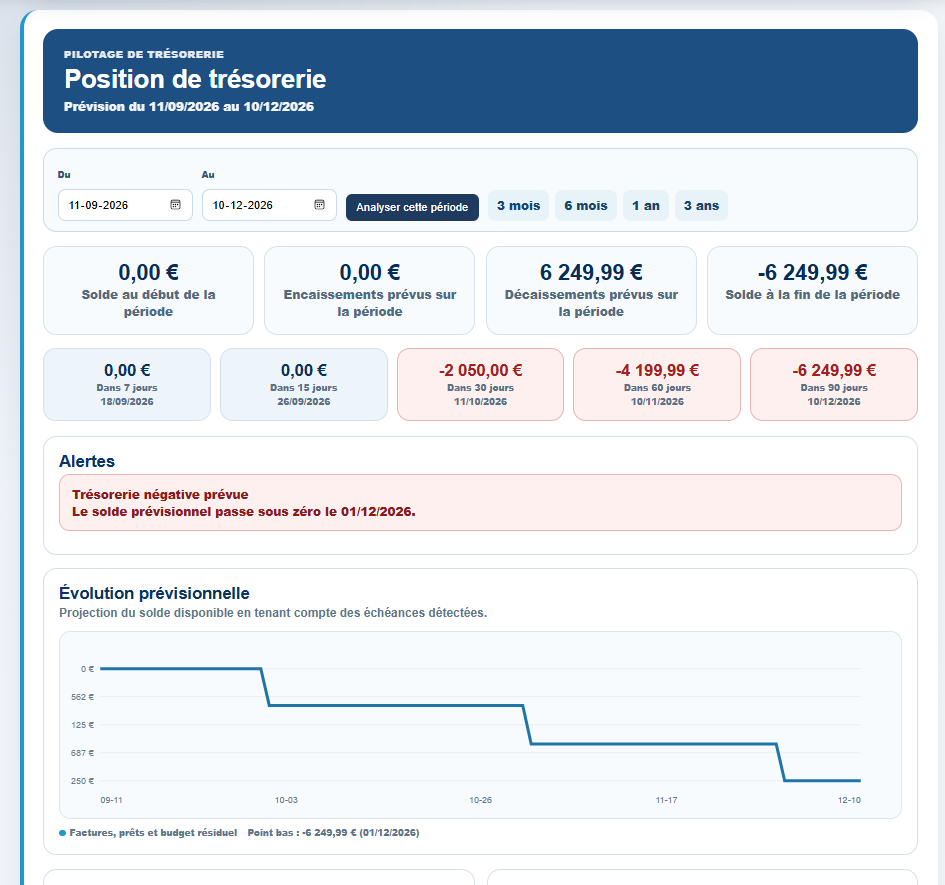
Current balance, projections and alerts are brought together in one view.
Budgets
Milo supports both an organisation-wide budget and budgets for individual projects or activities. Actual income and expenditure can then be compared with forecasts throughout the year.
Financing
Milo tracks lender, principal, interest rate, duration, repayments and outstanding capital. Upcoming and overdue amounts remain visible.
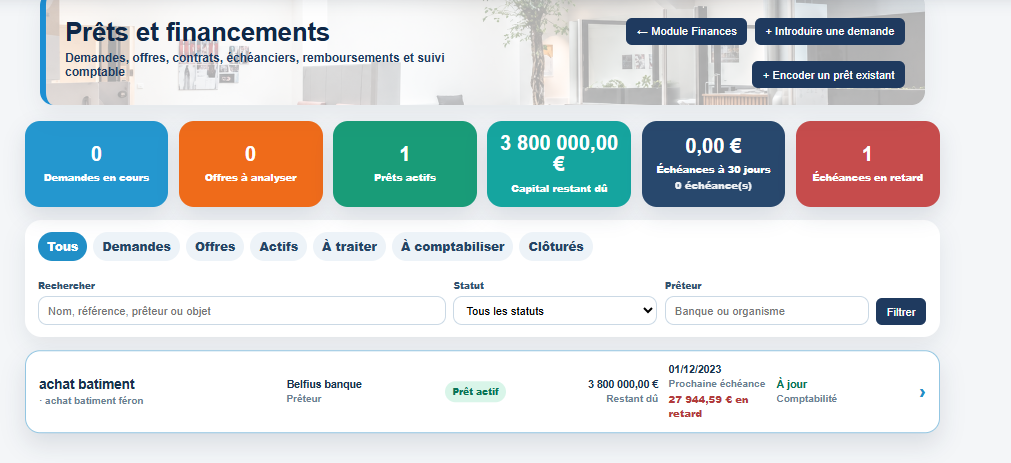
Amounts, due dates and status are brought together for a clear financing overview.
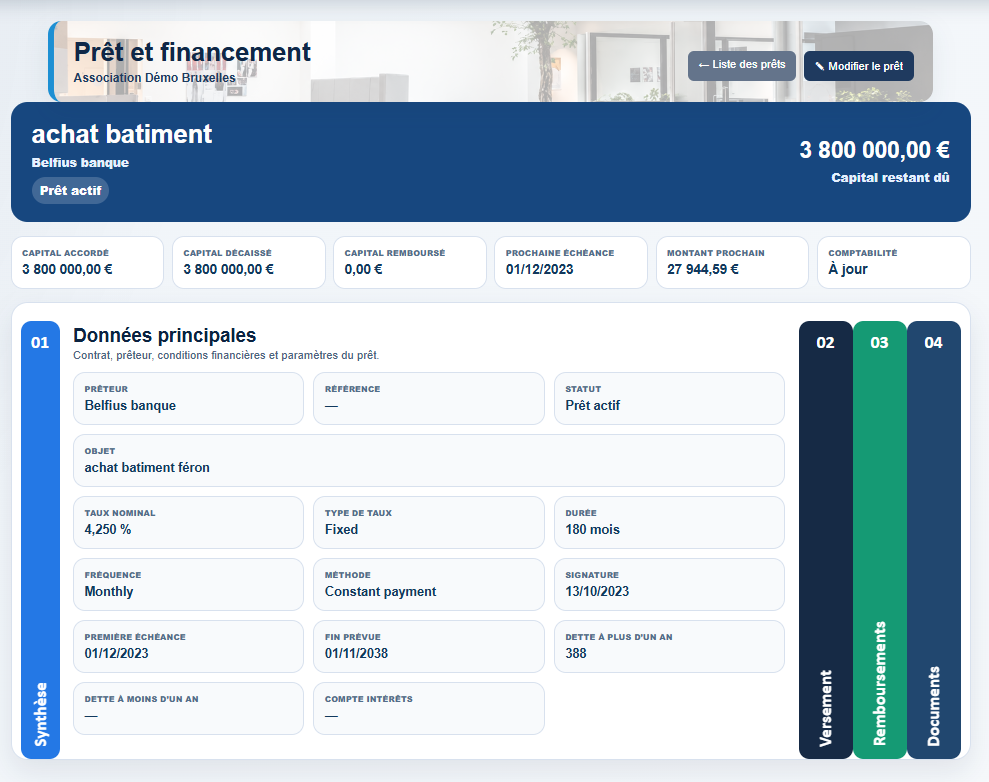
Disbursements, repayments and documents stay linked to the same record.
Donations
Donations can be recorded and linked to donors and campaigns. For organisations authorised to issue tax certificates, Milo prepares 281.71 certificates and their delivery to donors. Official reporting to the authorities remains through the prescribed channels.
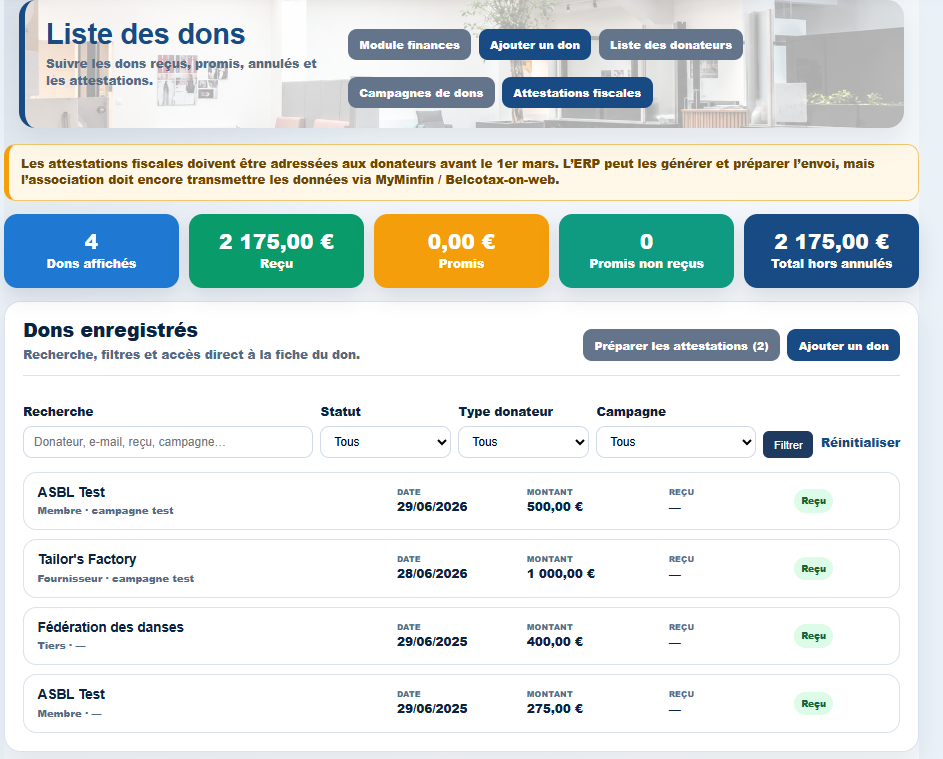
Donors, amounts, dates and campaigns remain tracked in Milo.
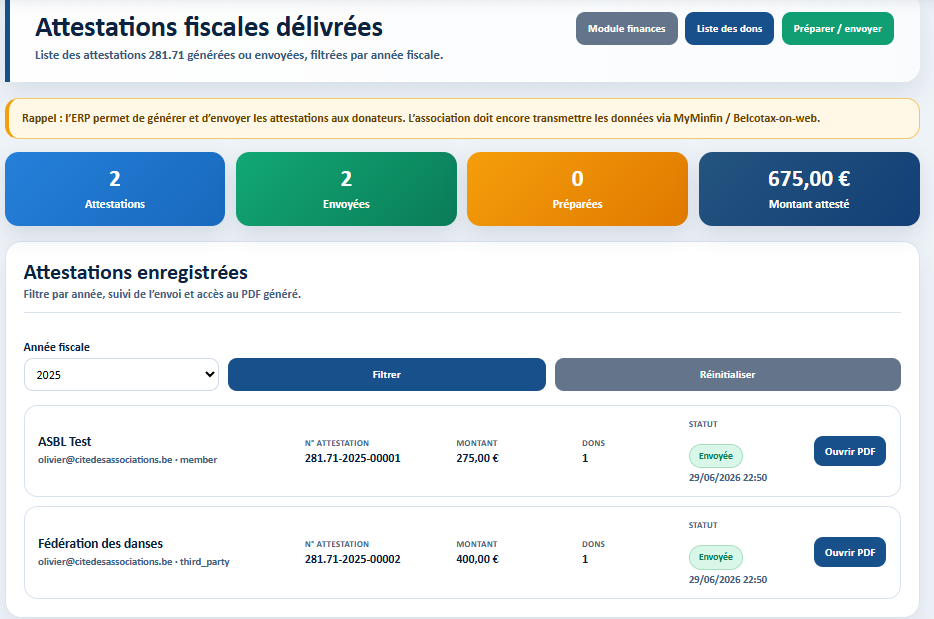
For eligible organisations, Milo prepares the tax certificates to be issued to donors.
With Milo, accounting is built from the organisation’s real management: information is entered once and then reused wherever it is needed.