Evaluate with explicit criteria
Each dimension is scored and can be justified.

Milo by XMILO · Pay transparency
European rules strengthen employers’ obligations on equal pay, transparency and job comparison. Milo turns those obligations into a guided, understandable and documented process.
Directive 2023/970 must be transposed into Belgian law. The framework for the private sector is not yet fully stabilised. Milo is therefore built on the European framework currently available and its regulatory reference can evolve when the final Belgian rules are adopted.
The framework
Pay transparency is more than comparing two numbers. Jobs must be described and objectively evaluated, workers linked to the jobs they actually perform, comparable categories built, pay analysed and responses documented.
Jobs & value of work
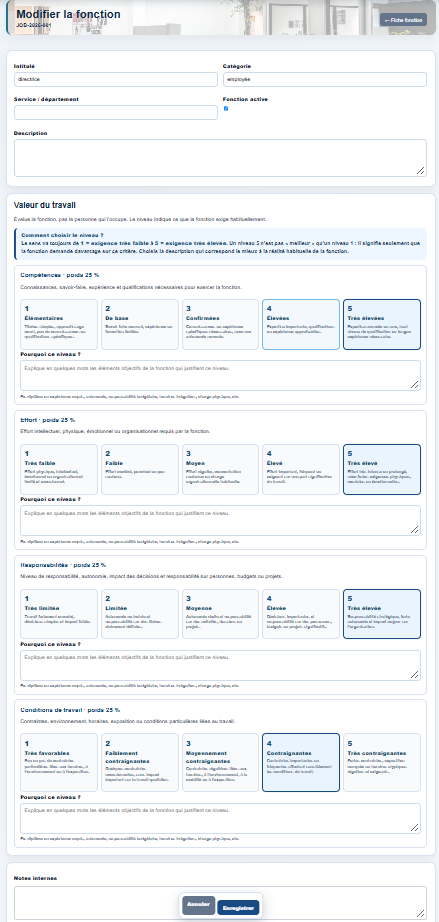
Milo lets you define each job and evaluate it across several dimensions: skills, effort, responsibilities and working conditions. The aim is to create an explainable, documented basis for deciding whether different jobs are of comparable value.
Each dimension is scored and can be justified.
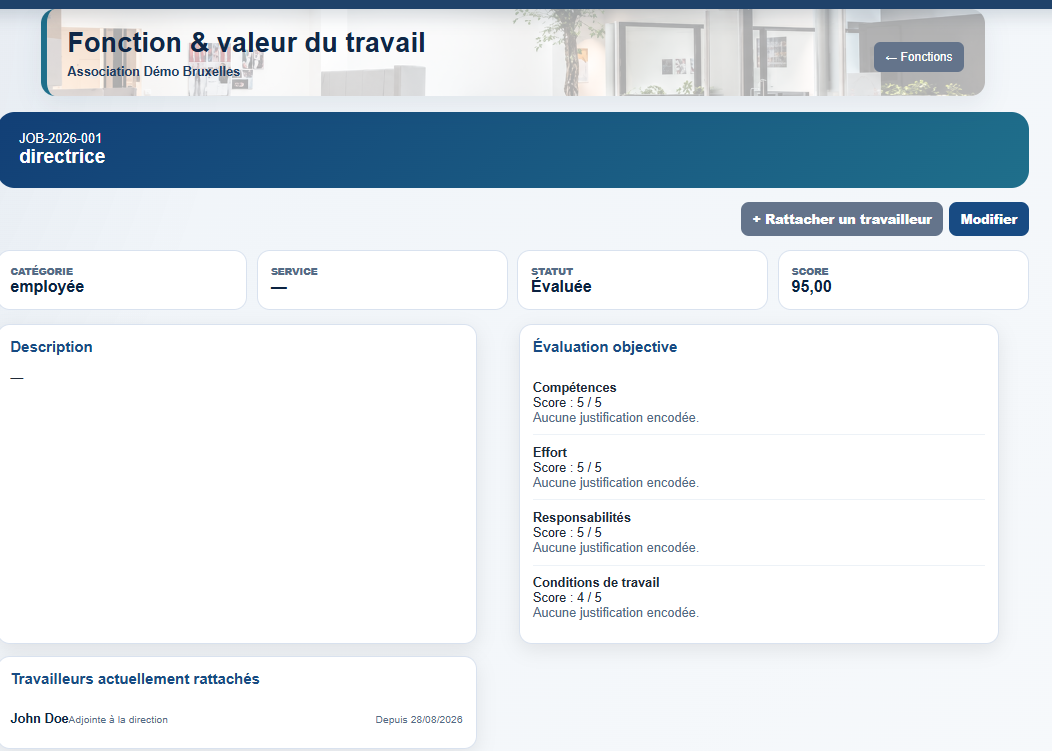
The job record brings together the score and the factors behind it.
Workers
A theoretical job is not enough. Milo links workers to the jobs they actually perform, keeps the assignment history and identifies the main job. Pay comparison therefore rests on a coherent structure linking jobs, workers and pay.
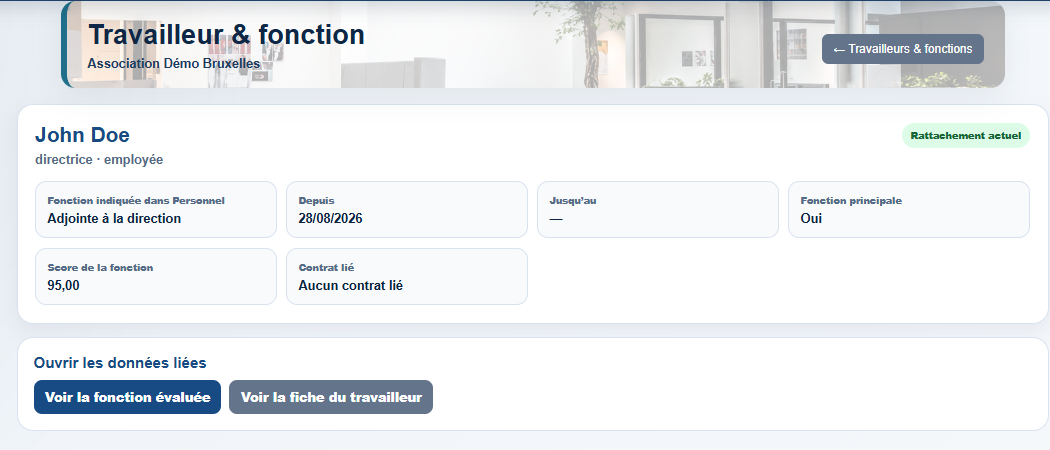
The assignment connects HR reality with the evaluated job.
Grids & categories
Once jobs are evaluated, Milo can place them into classes or ranges. Different jobs can therefore be grouped where they have comparable value. The aim is not to impose identical pay everywhere, but to provide an objective method to explain differences or flag those requiring review.
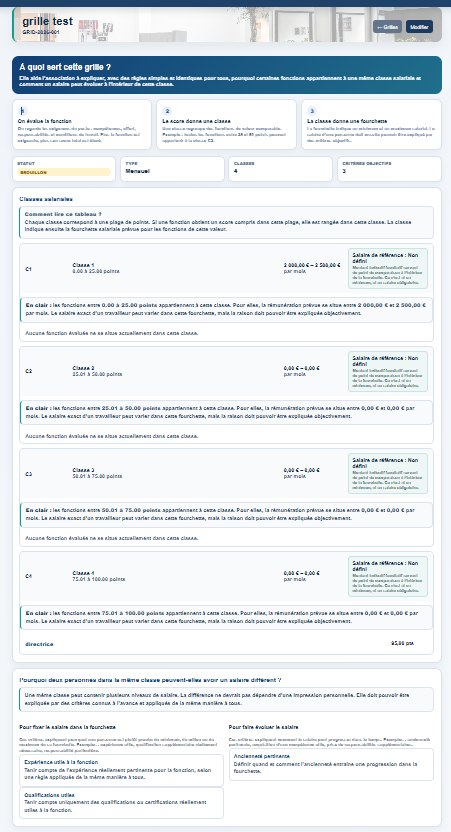
Classes, ranges and objective criteria provide a common framework.
Analysis
Milo brings job and pay data together for structured analysis. Managers can review coherent groups, distinguish differences justified by objective criteria and flag situations requiring further review. Milo supports analysis; it does not replace HR or legal judgment.
Information requests
Milo records incoming requests, tracks deadlines, keeps a history of transmissions and records the response actually communicated. Managers retain a clear trace of what was requested, prepared and sent.
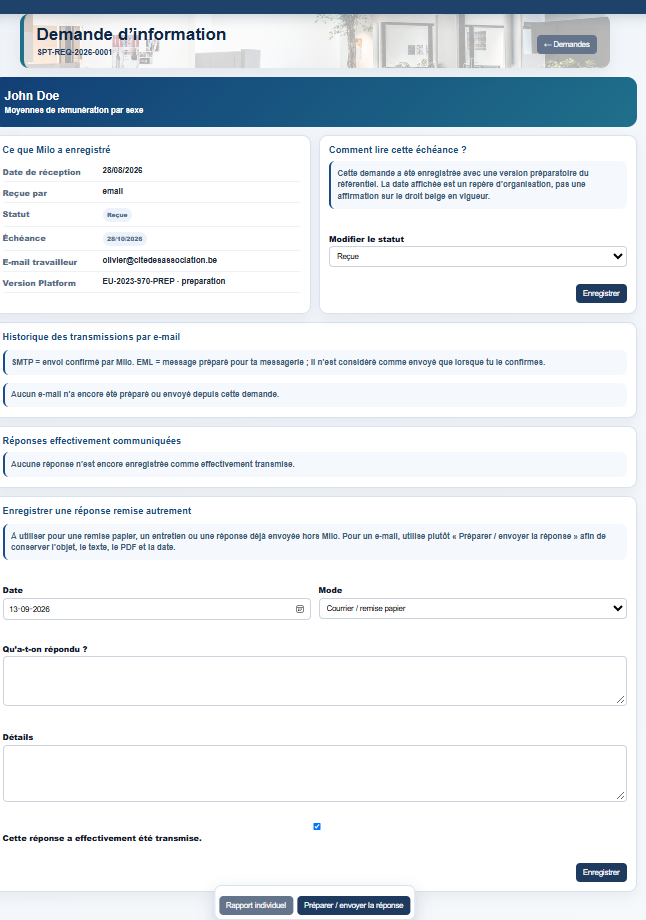
Receipt, deadline, transmission and actual response remain documented.
Reports
Jobs, evaluations, assignments, grids, pay data and information requests are already structured in Milo. The system can therefore produce the necessary summaries and documents without rebuilding the file each time.
Evolving regulatory framework
Organisation data remains separate from the regulatory reference maintained in Platform. When the final Belgian rules are settled, the reference can be updated without rebuilding jobs, assignments or pay data already entered.
Milo turns a complex subject into a guided process: describe jobs, evaluate them, link workers, build comparison categories, analyse pay, handle information requests and produce reports. The employer remains in control of decisions; Milo helps ensure nothing is missed and actions can be explained.